Majorca is without doubt the most comprehensive of the Balearic Islands, offering its cliffs of the west coast beaches in the south, its countless coves to the east, and the charms of the north coast.
marinas prices reached highs in recent years, reserving the stopovers in the ports to the well-filled wallets ...
Yet it is not impossible to go around virtually without pay. Except for essential supplies of water and diesel, it is feasible to switch places and "on port side" ... I shall learn probably not much accustomed to the place. So my little issue is addressed primarily to those who have the pleasure of discovering these waters.
Let first Mallorca that in high season (July-August) is almost saturated. But it is still possible not to become entangled in the chain of neighbor. Regarding the direction of turn, it is too uncertain to advise more than the other. However, it is common to find that, following an upwind side, and round a track with changing direction, it also rotates with you, and that he was still in the nose! Let
still in the Bay of Palma in the south of the island towards the east. Apart from the Cala Pi, very narrow and crowded, the first shelter is found CAMPOS (Colonia San Jordi). Small Majorcan village remained fairly authentic there is a good anchorage off the port, sheltered by the island of South La Guardia. (39 ° 18'9 N - 3 ° 00'14 E).
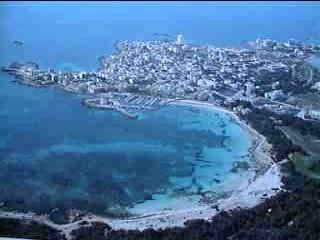
funds are keeping irregular, and the sand will be found towards the bottom, with buoys marking the edge of the beach. A descent in the Annex is very easy. The beautiful beach of Es Carbo is right in the east, also sheltered by the island's south Molton. A report that can be cut between the island La Guardia and the coast. It is at the center of the passage about 2 feet of water. IDPs and disaster can also cut between Molton and the coast, avoiding the large round (about 1 m of water)
Continuing towards the Cabo Salinas, there are two nice coves, and Entugores Caragol it more open to the SW. We distinguish the small archipelago in the south of Cabrera, consisting of several islands and a mainland. Parking and mooring in the latter are subject to authorization (to ask the Commandancia Militar de Palma).
The portion of Cabo Salinas is absolutely superb. White sand bottom create a water color turquoise, and it's like floating in a pool. The passage being honest, can be steep coast lined with nearly harmless.
whole SE coast of Majorca is indented many coves, which I do do not list, they are too numerous. To each according to discover the prevailing wind.
If you had a quote, I will discuss the Cala Mitjana (39 ° 23'15 N - 3 ° 14'93 E).
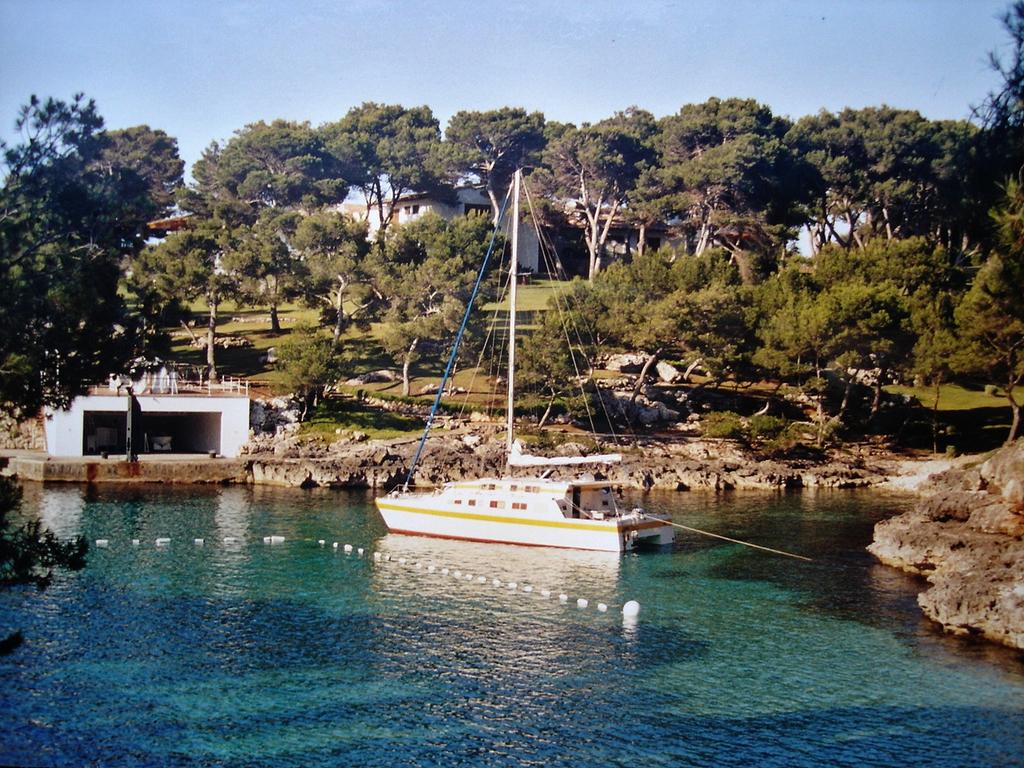
It makes a bend as soon as the starter, but a flag pole on the shore can locate it. Entirely private (except the sea, still happy!) Is anchored in the deepest possible (depending on the square), surrounded by lawns, gardens and rockeries of the most beautiful effect. Regardless of
calas, this coast has 3 major ports, which contain supplies. Going from south to north, Porto Petro, Porto Colom Porto Cristo and allow a shelter, while remaining at anchor.
In Porto Petro, (39 ° 21'64 N - 3 ° 12'79 E) they anchored right next to the small port of operetta.

If one plans to stay on board, it may be possible to find a hotel vacancy, even let him free on demand.
Porto Colom (39 ° 25'12 N - 3 ° 15'94 E) provides the best shelter that you can imagine. A marina was constructed in the background. But many safes are available for passage to the docks of the old port.

It is also possible to anchor on anchor in the cove SW Bassa Nova, reserved for small drafts (1 m to 1.50 m of water). A small fee is requested from some, unfortunately, even in this case. But the landing is very easy schedule.
Porto Cristo is at the mouth of a river.
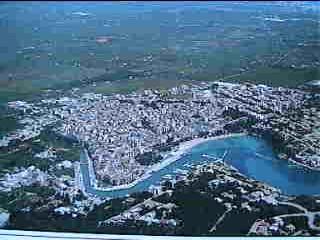
It is possible to anchor just after the first bend, but space is expensive, and heavy traffic! Unless a place becomes available to the public wharf (left bank, opposite the marina), with relatively reasonable prices.
A final port is located before the Cape of Pera, NE tip of Majorca. It Cala Ratjada. Relatively large fishing port, and especially very ... Germanized!
After the Cabo de Pera, the coast bends to the NW. A shelter can be found in Cala Molto (39 ° 43'71 N - 3 ° 27'31 E), a short distance from Cape.
Between Cabo del Freu Farrutx and Cabo, the coast is steep and can be prolonged without problems. On the road, there are a large rock isolates of Farayo Aubarca (or Farallon). The passage between the rock and the earth is healthy.
Farrutx Between Cabo and Cabo Formentor, there are two large windows open to the NE: the Bay of Alcudia, and that of Pollensa.
Just south of Cabo Farrutx, is nestled a small shelter of Es Calo (39 ° 46'22 N - 3 ° 20'02 E)
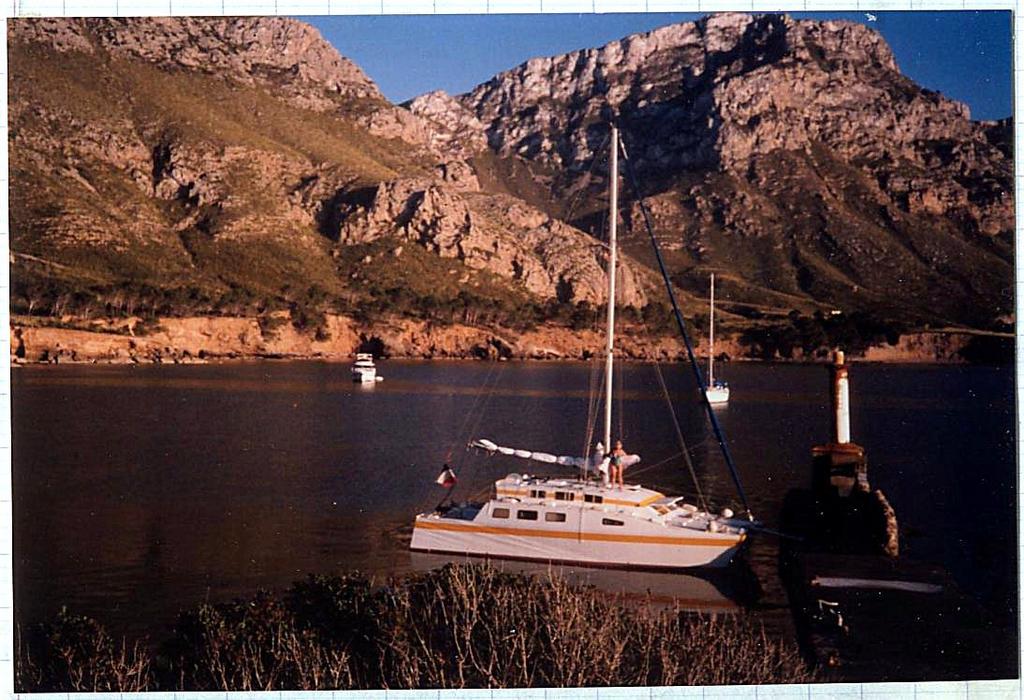
enchassé superb location at the foot of pristine hills all habitations. A small pier fire extinguished allows easy landings, but reserved for small drafts (1,50 foot).
The bottom of the Bay of Alcudia is of little attractions: funds unhealthy urbanized landscape (too). Alcudia is a commercial port and marina important. However, it is very possible to practically wet foot shopping port and hence to make a refueling schedule. funds are sandy grassy good performance. (39 ° 50'22 N - 3 ° 07'86 E)
the east of the port, there is also a very pleasant anchorage in the Isle Aucanada with supermercado nearby. The transition to land between the island and the land is impractical.
By continuing to Cabo del Pinar, which separates the two bays, one will find an anchorage in a beautiful nature to Coll Baix, its only drawback being to be often wheeler. (39 ° 51'8 N - 3 ° 11'31 E).
The Cabo del Pinar doing some sort of tip, are three small coves on the south side Pollensa. Tiny beaches of white sand, they are unfortunately military zone, which pushes the anchor in funds already significant (ten meters).
By continuing along this side of the SE Bay of Pollensa the tiny port of Bonaire (El Cocodrilo) allows a small supply, laying off the piers if the wind is favorable.
A word about the weather in the bay in summer. The sea breeze sets them very regularly NE, rising in the late morning, reaching its maximum (force 4 / 5, rarely more) in the late afternoon, and falling at night. By cons of nocturnal thunderstorms occur there frequently. They can be violent.
Pollensa offers an anchorage area is quite extraordinary, in the NW of the bay. Between the tip Avanzada (39 ° 63'9 N - 3 ° 06'6 E) and port funds do not exceed 3 m of water over a distance of several miles. This leaves room for wet. It was spoiled for choice. Numerous vessels are anchored there. Dead bodies began to be intallation. With a little luck and a quiet morning, we can find a concrete block (remnant of the civil war) on which it is easy to moor (diving in 2 m of water).
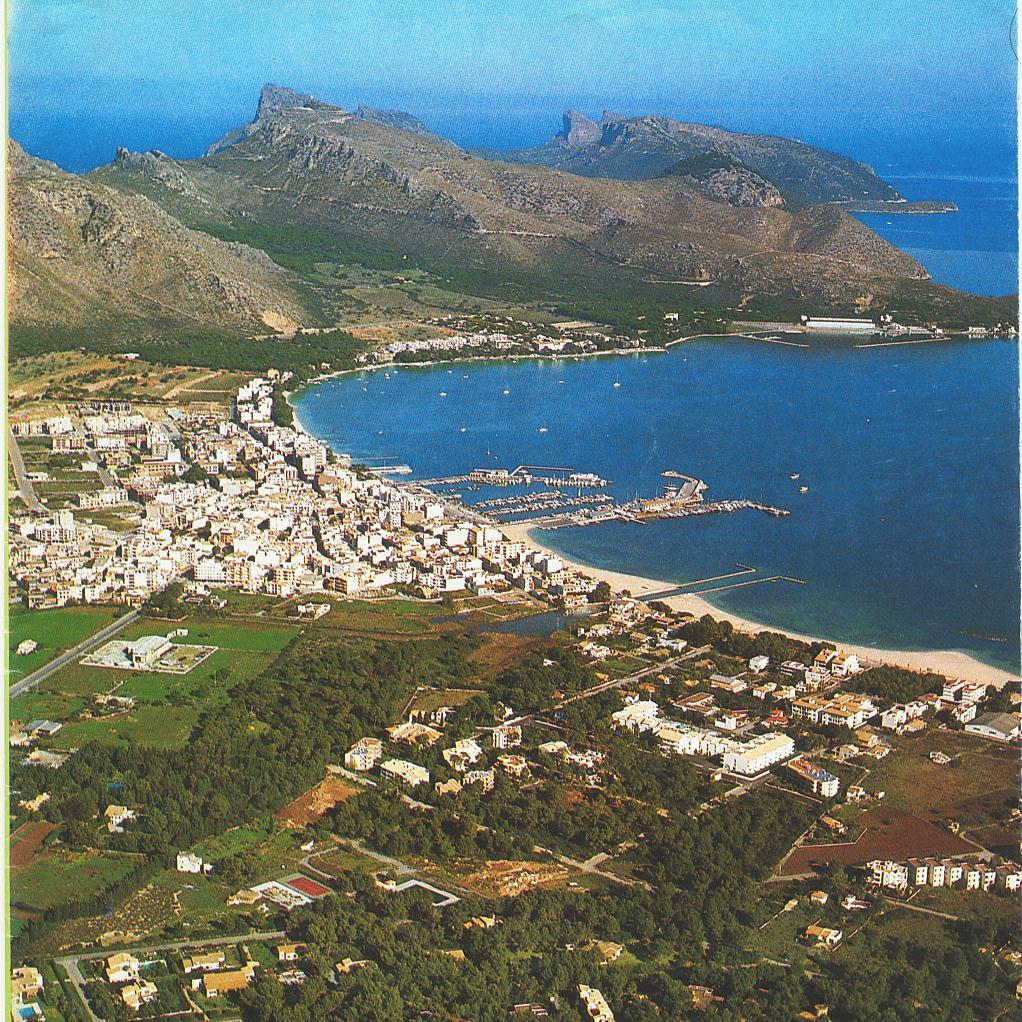
Pollensa is one of the most chic Majorca (prices for that matter!): A succession of small beaches bordered by pine trees, relatively preserved architecture ... Between the marina itself and the seaplane base (we see often Canadairs Train), it is not the place that is missing. The funds are held good, and the water almost too hot (lack of substance!) Another popular anchorage is located on the W side of the tip Avanzada.
Leaving the bay of Pollensa, two small coves, and Murta Engossauba allow a temporary halt.
Cape Formentor marks the end of NE Mallorca. Being totally steep, it may be time very closely. Any
the NW coast of Mallorca offers a rugged beauty. Puig Major peaks over 1400 meters, and when the sea is calm, you could imagine navigating a mountain lake. By cons
this coast has only one real shelter, port Soller. Nestled between the mountains surrounding it allows a shelter near perfect, then the narrow entrance widens into a circle. One part is reserved for the English Navy. It would matter to adapt it to the craft.
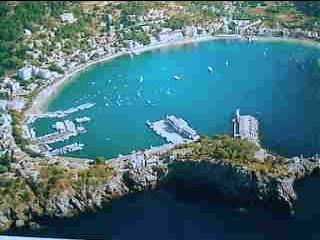
Maybe this is it done? Anyway, a single platform offering a very limited number of places, and boats are anchored just outside the beach buoys. But places are expensive ... If a teammate is sacrificed to the "quarter-wetting," the tour not to miss is that which leads to the port town of Soller, on the interior. The small Tram is the most picturesque, and the ride is worth the detour. For those who have more time, you can also reach across the mountains from many tunnels, the city of Palma in a train style "western". What to do if possible ... In some
this coast may seem monotonous in the long run. Yet the beauty of this coast is a place quite remarkable. Perhaps the descent will she fully under spinnaker? One can always hope. Otherwise, it will be the engine, to see the island of Dragon, the SW tip of Majorca.
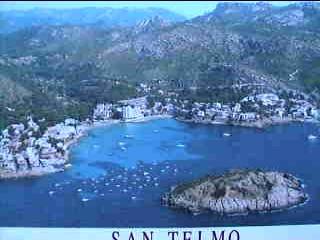
Just opposite the cult-charming village of San Telmo offers a good opportunity wetting, relatively little used elsewhere.
Coast now facing SW, independently of several coves, some important (Paguera, Santa Ponsa) allows a shelter at the port of Andratx. (39 ° 32'6 N - 2 ° 23'8 E).
When left on the left against the causeway, is wetted just before the South Pier, funds held on average (rock slabs locally).
Going to Cala Figuera, which marks the entrance of Palma, one can go, remaining at the center, between the coast and the island del Toro.
In the Bay of Palma itself, there are several coves, temporary shelter (or nocturnal if time permits). Unlike Pollensa, the sea breeze from SW in the Bay of Palma, at the same times ...
A last word of Islets. This small island allows anchorage of one side or the other, depending on the wind (39 ° 31'8 N - 2 ° 35'3 E).
It is already there at the gates of the city. It also saturated with several marinas that expensive, I say nothing, but regrets his public dock cheap, or the ability to anchor in front of the Paseo Marítimo, all things now banned ...


0 comments:
Post a Comment